How to Choose the Right Industrial Valve

Selecting the right industrial valve is essential for ensuring efficient, safe, and reliable operation of any fluid handling system. Valves play a critical role in controlling the flow of liquids, gases, steam, and other media across industrial processes. Choosing the wrong valve can lead to performance issues, increased maintenance costs, system failures, and operational downtime.

With a wide variety of valve types, materials, and configurations available, understanding the specific requirements of your application is the first step toward making the right selection. Factors such as pressure, temperature, flow characteristics, and media compatibility all influence valve performance and longevity.

The right industrial valve not only controls flow efficiently but also enhances system reliability, safety, and long-term operational performance.

— KARMA Valves

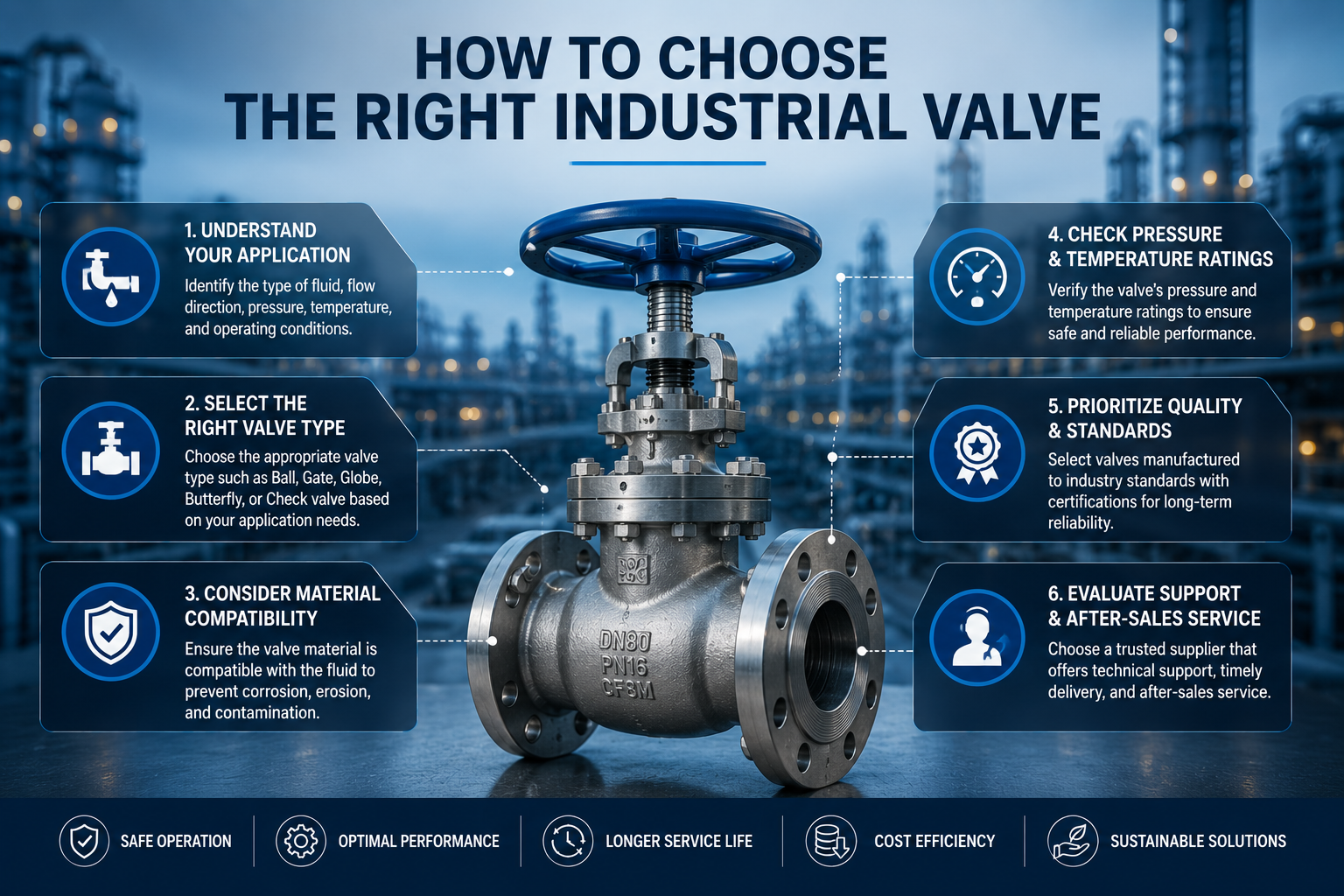
Understand Your Application Requirements

Before selecting a valve, it is important to evaluate the operating conditions of your system. Different industrial processes have unique requirements, and the valve must be capable of performing reliably under those conditions.

Consider factors such as the type of media being handled, operating pressure, temperature range, flow rate, and installation environment. These factors help determine the most suitable valve design and material.

  • Type of fluid, gas, steam, or chemical being controlled
  • Operating pressure and temperature conditions
  • Required flow rate and control accuracy
  • Frequency of valve operation
  • Environmental and safety requirements
  • Industry-specific standards and regulations

Choose the Appropriate Valve Type

Different valve designs are intended for specific functions. Selecting the correct valve type ensures optimal performance and efficiency within the system.

  • Ball Valves: Ideal for quick shut-off and reliable sealing.
  • Gate Valves: Best suited for full-flow isolation applications.
  • Globe Valves: Suitable for precise flow regulation.
  • Butterfly Valves: Lightweight and efficient for large-diameter pipelines.
  • Check Valves: Prevent backflow and protect system equipment.
  • Plug Valves: Effective for on-off control in various industrial processes.

Select the Right Valve Material

Material selection is critical to ensuring durability and compatibility with the process media. The wrong material can result in corrosion, wear, contamination, or premature failure.

  • Stainless Steel for corrosion resistance and hygienic applications
  • Carbon Steel for high-pressure industrial environments
  • Cast Iron for general-purpose applications
  • Bronze and Brass for water and low-pressure systems
  • Special alloys for highly corrosive or extreme-temperature conditions

Consider Pressure and Temperature Ratings

Every valve is designed to operate within specific pressure and temperature limits. Choosing a valve with the appropriate ratings helps ensure safety and long-term performance.

Always verify that the valve’s specifications meet or exceed the maximum operating conditions of the system. This reduces the risk of equipment damage and unexpected failures.

Evaluate Maintenance and Lifecycle Costs

While initial purchase cost is an important consideration, long-term value should also be evaluated. High-quality valves often provide lower lifecycle costs due to reduced maintenance requirements, longer service life, and improved reliability.

Investing in a durable and well-engineered valve can help minimize downtime and improve overall system efficiency over the years.

Work with a Trusted Valve Manufacturer

Partnering with an experienced and reputable valve manufacturer ensures access to high-quality products, technical expertise, and reliable support. Manufacturers with strong quality control processes and industry certifications can help you select valves that meet your operational requirements.

  • Proven product quality and performance
  • Compliance with industry standards
  • Technical guidance and support
  • Reliable after-sales service
  • Customized valve solutions when required

Conclusion

Choosing the right industrial valve requires careful consideration of application requirements, valve type, material compatibility, pressure and temperature conditions, and long-term maintenance needs. A properly selected valve improves system performance, enhances safety, and reduces operational costs. By working with a trusted valve manufacturer and investing in quality products, businesses can ensure reliable and efficient flow control for years to come.

Why Stainless-Steel Valves Are in High Demand

In today’s industrial landscape, reliability, durability, and efficiency are critical factors when selecting flow control equipment. Stainless-steel valves have become the preferred choice across industries due to their exceptional corrosion resistance, long service life, and ability to perform in demanding environments. From chemical processing plants and oil & gas facilities to food processing and water treatment systems, stainless-steel valves play a vital role in ensuring safe and efficient operations.

Unlike conventional materials, stainless steel offers superior resistance against rust, chemical reactions, and extreme temperatures. This makes stainless-steel valves ideal for applications where product purity, operational safety, and long-term performance are essential. Their robust construction helps reduce maintenance requirements, minimize downtime, and improve overall system efficiency.

Stainless-steel valves are an investment in reliability, delivering long-lasting performance, corrosion resistance, and operational efficiency across a wide range of industrial applications.

— KARMA Valves

Key Reasons Behind Their Growing Demand

As industries continue to modernize their infrastructure and prioritize operational efficiency, the demand for stainless-steel valves continues to grow. Their versatility and performance make them suitable for a wide range of fluid handling applications.

Stainless-steel valves provide excellent resistance to corrosion, making them ideal for aggressive chemicals, seawater environments, and sanitary applications. Their strength and durability enable them to withstand high pressures and temperatures without compromising performance.

  • Superior corrosion and rust resistance
  • Excellent performance in high-temperature applications
  • Long service life with minimal maintenance
  • Suitable for food, pharmaceutical, and hygienic processes
  • High strength and pressure-handling capabilities
  • Reduced lifecycle costs and downtime

Applications of Stainless-Steel Valves

Stainless-steel valves are widely used in industries where reliability and cleanliness are essential. Their ability to handle various media while maintaining structural integrity makes them a trusted solution across multiple sectors.

  • Chemical & Petrochemical Plants
  • Oil & Gas Processing Facilities
  • Food & Beverage Manufacturing
  • Pharmaceutical Production
  • Water Treatment & Distribution Systems
  • Power Generation Plants
  • Marine & Offshore Applications

Benefits for Industrial Operations

Choosing stainless-steel valves can significantly improve operational reliability while reducing maintenance costs. Their resistance to wear, corrosion, and contamination ensures uninterrupted performance even under harsh operating conditions.

In addition, stainless-steel valves contribute to enhanced safety and regulatory compliance, particularly in industries that require hygienic processing or exposure to aggressive chemicals. Their durable design helps maximize productivity and minimize unexpected equipment failures.

Conclusion

The increasing demand for stainless-steel valves is driven by their unmatched durability, corrosion resistance, and long-term cost-effectiveness. As industries continue to focus on efficiency, sustainability, and operational reliability, stainless-steel valves remain a preferred choice for modern flow control systems. Investing in high-quality stainless-steel valves ensures dependable performance, reduced maintenance, and long-lasting value for industrial operations.

Best Industrial Valve Manufacturer for Quality and Reliability

Choosing the right industrial valve manufacturer is essential for ensuring reliable system performance, operational safety, and long-term efficiency. Industrial valves are critical components in controlling the flow of liquids, gases, steam, and other process media across various industries. The quality of these valves directly impacts productivity, maintenance requirements, and overall operational costs.

A trusted industrial valve manufacturer delivers products that meet stringent quality standards, provide consistent performance, and withstand demanding operating conditions. From oil & gas facilities and chemical processing plants to water treatment systems and power generation industries, reliable valve solutions play a vital role in maintaining smooth and efficient operations.

Quality industrial valves are the foundation of safe, efficient, and reliable flow control systems across modern industries.

— KARMA Valves

What Defines a Reliable Industrial Valve Manufacturer?

The best industrial valve manufacturers are distinguished by their commitment to quality, innovation, and customer satisfaction. They invest in advanced manufacturing processes, rigorous testing procedures, and continuous product development to ensure superior valve performance.

Reliability goes beyond product quality. It also includes technical expertise, timely delivery, responsive customer support, and the ability to provide solutions for diverse industrial applications.

  • Strict quality control and testing standards
  • Use of premium-grade materials
  • Compliance with international certifications and standards
  • Advanced manufacturing capabilities
  • Strong technical support and engineering expertise
  • Proven track record across industries

Key Features of High-Quality Industrial Valves

High-quality industrial valves are designed to deliver dependable performance in challenging environments. They are engineered to withstand pressure fluctuations, temperature extremes, and corrosive media while maintaining precise flow control.

  • Excellent durability and long service life
  • Superior sealing performance
  • High resistance to corrosion and wear
  • Reliable operation under extreme conditions
  • Low maintenance requirements
  • Consistent and accurate flow control

Industries That Depend on Reliable Valve Manufacturers

Industrial valves are used across a wide range of sectors where performance, safety, and efficiency are critical. Reliable manufacturers provide solutions tailored to the unique demands of each industry.

  • Oil & Gas Processing Facilities
  • Chemical & Petrochemical Plants
  • Water Treatment and Distribution Systems
  • Power Generation Stations
  • Food & Beverage Manufacturing
  • Pharmaceutical Processing Facilities
  • Marine and Offshore Applications

Benefits of Partnering with a Trusted Manufacturer

Working with a reputable industrial valve manufacturer offers numerous advantages beyond product quality. Reliable manufacturers help businesses improve operational efficiency, reduce maintenance costs, and minimize unexpected equipment failures.

Their technical expertise and product knowledge ensure that customers receive the most suitable valve solutions for their specific applications, leading to better performance and long-term value.

  • Improved operational reliability
  • Reduced downtime and maintenance costs
  • Access to technical expertise and support
  • Customized valve solutions for specialized applications
  • Faster delivery and dependable service
  • Long-term return on investment

Why Quality Should Never Be Compromised

While lower-cost valve options may appear attractive initially, they often result in higher lifecycle costs due to frequent repairs, replacements, and operational disruptions. Investing in high-quality valves from a trusted manufacturer helps prevent these issues and ensures consistent system performance.

Reliable valves contribute to safer operations, improved productivity, and compliance with industry regulations, making quality a crucial factor in the selection process.

Conclusion

Selecting the best industrial valve manufacturer is a strategic decision that directly impacts operational efficiency, safety, and long-term business success. A manufacturer known for quality, reliability, and technical expertise can provide durable valve solutions that perform consistently in demanding industrial environments. By partnering with a trusted valve manufacturer, businesses can ensure dependable flow control, reduced maintenance costs, and greater confidence in their operations.